

Quick answer: Moving out for society redevelopment is really two moves, years apart: out of the old flat into a rental (often with part of your things in storage), and back into the new flat when it is ready. Before you move, make sure your agreement fixes transit rent, a shifting allowance for both moves, the timeline and penalties, and that the developer has the approvals to start work. Then plan what goes to the rental, what goes to storage and what you sell.
Society redevelopment is changing Thane and Mumbai faster than anything else. A Kotak Mahindra Bank report in November 2026 put the growth of redevelopment activity in Mumbai at nearly 66% a year over the last five years. In Thane, the cluster scheme at Kisan Nagar covers nearly 10,000 homes, and the Siddheshwar Lake cluster, for about 6,000 families, had its groundbreaking in September 2026. Add the many old cooperative societies in Mulund, Bhandup and older parts of Thane going the same way, and thousands of families are packing up homes they have lived in for decades.
We are movers, not lawyers, so this guide does not try to tell you whether your society should redevelop. It covers the part we know: how to get out of the old flat and back into the new one without losing money, belongings or sleep.
Redevelopment Is Two Moves, Not One
| Move 1: moving out | Move 2: moving back | |
|---|---|---|
| When | After the agreement and approvals, before demolition | When the new building gets its occupation certificate and possession is given |
| From and to | Old flat to a rented flat, often with some goods to storage | Rented flat and storage to the new flat |
| Main risk | Moving too early, before the project is secure | Damage to goods stored for years; a new flat with snags |
| Who pays | Usually covered by a shifting allowance in the agreement | Usually covered too, if the agreement says so |
The time between the two moves is commonly quoted at two to four years, and longer if the project stalls. Plan Move 1 knowing that Move 2 is coming.
The Society Redevelopment Process in Brief
You do not need to be an expert in the process, but knowing the stages tells you when the moving date is real and when it is still a hope. Typically, the steps run like this:
- Society resolution. Under the state’s directions issued under Section 79A of the Maharashtra Co-operative Societies Act, the decision to redevelop and the choice of developer are taken at special general body meetings, with the consent of the required share of members.
- Development agreement. The society signs a registered development agreement with the developer, and each member signs a permanent alternate accommodation agreement for their new flat.
- Planning approvals. The developer gets the building plans approved. In Mumbai, the extra FSI a building can get is set by DCPR 2034; in Thane, by the state’s Unified DCPR.
- RERA registration. Because a redevelopment project usually includes flats for sale, it is generally registered with MahaRERA. The registration number lets you follow the project’s progress and completion date online.
- Vacating and demolition. Members move out, transit rent starts, and the old building comes down.
- Construction and possession. The new building is built, gets its occupation certificate, and members get possession.
Your moving date sits between steps 4 and 5. If a developer asks members to vacate before the approvals are in place, that is the moment to slow down and ask questions.
Before You Vacate: Check Your Redevelopment Agreement
These are the clauses in the development agreement that directly affect your move. Ask your society’s lawyer or your own to confirm each one before you hand over the keys.
Transit rent
The monthly amount, whether it is paid in advance (many guides recommend quarterly or more in advance), and whether it rises if the project runs late. It should reflect the market rent for a similar flat in the same area, not a figure from years ago.
Shifting allowance
A one-time amount for moving out, and another for moving back. Agreements often include this, but the amount is negotiated, not fixed by law. Check that it covers both moves.
Corpus fund
Many agreements include a one-time corpus amount paid to members or the society. It is separate from rent and shifting money, and its tax treatment can differ, so ask a tax adviser.
Timeline, delays and penalties
The promised completion and possession date, and what the developer pays for each month of delay. Delays are the most common cause of disputes in redevelopment projects.
Bank guarantee
Many societies ask the developer for a bank guarantee to protect members if rent stops or work stalls.
Approvals before vacating
Guides on redevelopment in Mumbai advise members not to vacate until the developer has the required sanctions to start work. An empty building with no approvals is the worst position to be in.
Your new flat
Carpet area, floor, parking and amenities written into your permanent alternate accommodation agreement. These are your rights in the new building; get them in writing.
Why it matters: in November 2026, the Bombay High Court ordered a developer to pay a Nahur society more than ₹53 lakh in unpaid transit rent after construction stalled in December 2023 and rent stopped in February 2025. The members had already moved out and were paying rent themselves. A clear agreement, and a guarantee behind it, is what made recovery possible.
Move 1: Moving Out of the Old Flat
Find the rental first, then fix the moving date
When a whole building moves out together, every family is hunting for a flat in the same area in the same month, and rents near redevelopment belts have been rising. Start looking as soon as the vacating date is announced. If you can, find a rental before you book the truck.
Decide what goes where
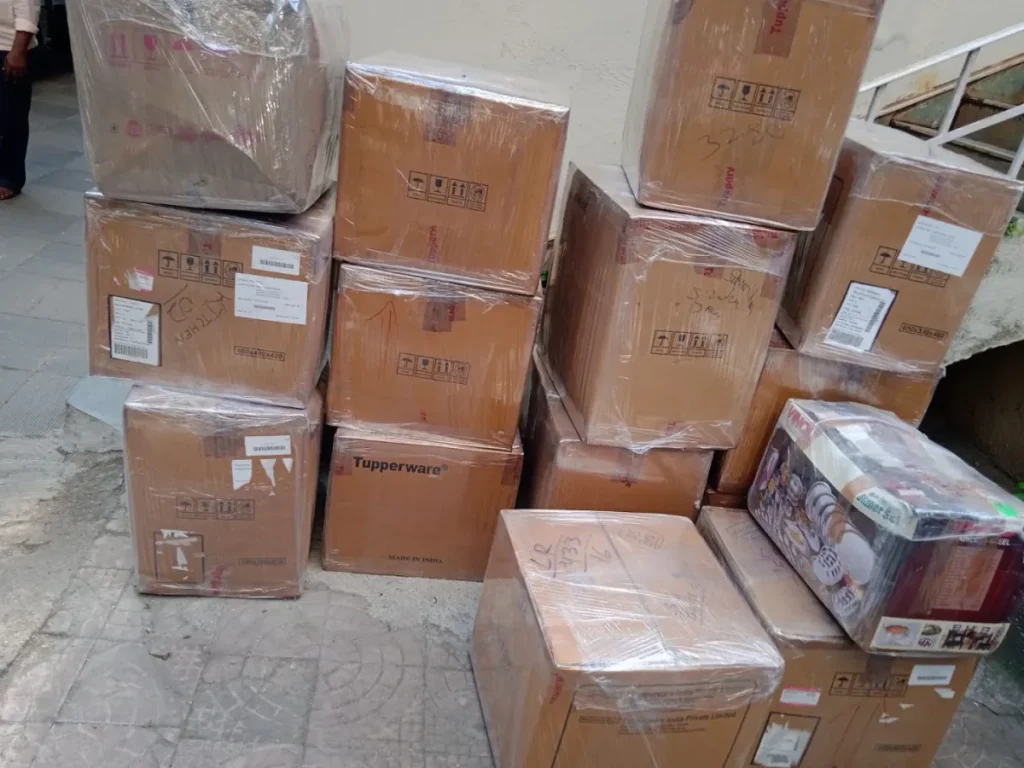
Rented flats are often smaller than the home you are leaving, and you will be in one for years. Sort everything into three groups:
| Goes to the rental | Goes to storage | Sell or give away |
|---|---|---|
| Beds, daily kitchen items, clothes for all seasons, work desk, fridge and washing machine | Extra furniture, the heavy dining set, festival items, old trunks, books you won’t open for years | Old furniture that won’t suit the new flat, broken appliances, things you kept “just in case” |
A good rule: if you won’t use it in the next year and it will not fit the new flat’s layout, it probably should not be paid for in storage for three years.
Plan around your neighbours
In a 30-flat society, 30 families may want to move in the same few weeks. The lift, the gate and the parking space in front of the building become the bottleneck. Ask the society committee to draw up a moving schedule, with dates or time slots for each wing, so trucks are not queuing on the road. If several families use the same mover, a combined schedule helps everyone.
Move the important documents yourself
Your share certificate, the redevelopment agreement, the permanent alternate accommodation agreement, property tax receipts, ID and bank papers should never go into storage or onto a truck. Keep them with you, with copies scanned to your phone.
Storing Your Belongings During Redevelopment
Storage for a few weeks and storage for three years are different jobs. Over a long period, Mumbai’s monsoon damp is the main enemy, followed by pests and forgotten inventory. Before you choose a storage option, ask:
- Is the space dry and off the floor, and how is it protected in the monsoon?
- Is there a signed inventory, with photos of the condition of each item?
- How is wooden furniture and upholstery packed for long-term storage, not just for a truck ride?
- Can you take out an item mid-way, and with how much notice?
- What insurance applies, and on what declared value?
- What is the monthly cost, and does it rise after the first year?
We offer mover-managed storage: we pack, pick up, store and deliver with a signed inventory, priced after a survey. If the redevelopment is in Mulund, see our Mulund West page, where we cover the two-move plan in more detail.
Move 2: Moving Back Into the New Flat
Moving back sounds simple: you know the building and the area. In practice it is the harder move, for three reasons.
- Goods come from two places. The rental and the storage unit, on the same day or on different days. Plan which comes first so the new flat isn’t blocked.
- Everyone moves back at once. Possession is usually given to the whole building in a short window, so the lift and gate problems come back.
- A brand-new flat has snags. Check the flat before the furniture arrives: doors, windows, plumbing, electrical points, tiles and seepage. It is much easier to fix a leaking bathroom in an empty flat.
Many families time the return with a griha pravesh. If that applies to you, our griha pravesh muhurat guide lists the dates and timings for Mumbai and Thane.
What Redevelopment Shifting Costs
Each of the two moves is priced like a normal local move. Our local rates within Thane, Mulund, Bhandup and nearby are ₹3,100 to ₹7,200 for a 1 RK, ₹3,900 to ₹9,800 for a 1 BHK, ₹5,800 to ₹14,200 for a 2 BHK and ₹7,600 to ₹17,600 for a 3 BHK, including packing material, labour, transport, unpacking and GST. Storage is extra and priced on volume and duration. See the full 2026 rate card for what moves the price within each range.
Compare that with the shifting allowance in your agreement. If the allowance is a fixed sum, it is worth getting a written quote for both moves before you sign, so you know whether it covers the real cost, including storage.
A Redevelopment Moving Checklist
- Agreement signed, approvals in place, transit rent and shifting allowance confirmed.
- Rental found and the vacating date fixed with the society.
- Belongings sorted into rental, storage and sell.
- Survey done and written quote received for Move 1 and storage.
- Moving slot agreed with the society schedule; lift and parking booked.
- Documents and valuables set aside to carry yourself.
- Utilities closed at the old flat and opened at the rental.
- Storage inventory signed and photographed.
- Rent receipts and all developer letters filed for the years ahead.
- At possession: snag check before Move 2.
Frequently Asked Questions
Does the builder pay for shifting during society redevelopment?
Often, yes, through a shifting allowance in the redevelopment agreement. The amount is negotiated, not fixed by law, so check that it covers both moving out and moving back, and get a written moving quote to compare.
When should we vacate the flat for redevelopment?
Only after the agreement is signed and the developer has the approvals needed to start work. Lawyers and guides on Mumbai redevelopment advise against vacating before that point.
Should we store our furniture during redevelopment?
If the rental is smaller than your old flat, storing extra furniture can be cheaper than renting a bigger home for years. Store only what you will use in the new flat, in a dry space with a signed inventory.
How long does redevelopment take?
It is commonly quoted at two to four years from vacating to possession, but projects can run longer if they stall. That is why the agreement’s timeline, penalties and transit rent terms matter.
How do we avoid a traffic jam when the whole building moves out?
Ask the society committee to schedule moving dates or slots by wing, book the lift and parking for each slot, and book movers early. If several families use the same mover, a shared schedule helps.
Plan Both Moves With One Team
We have offices in Kasarvadavali and Mulund West, our own trucks and crew, and storage for the years in between. Send us your society’s vacating date and your flat size, and we’ll survey and quote both moves. Call or WhatsApp 93224 70950, or use the free quote form.
Sources: Kotak Mahindra Bank report as reported by The Federal (5 November 2026); Bombay High Court order in Sangat Sadan CHS v. Guinea Global Next LLP, reported 2 November 2026; Free Press Journal on Thane cluster redevelopment (22 September 2026). This is general information, not legal advice.