Quick answer: Before you take possession of a new flat, check the occupation certificate (OC), inspect the flat room by room and give the builder a written snag list, and collect the possession letter, keys, warranties and no-dues letter. Then set up electricity, piped gas, water and society registration, book the lift and a moving slot with the builder, and only then bring in the furniture. Under RERA, the builder must fix structural and workmanship defects reported within five years of possession, within 30 days, at no cost.
Getting the keys to a new flat is a big day, and it is easy to rush it. A common mistake in new towers on Ghodbunder Road, in Manpada, Majiwada and along the Kalyan–Shil road is letting the furniture arrive before the flat is checked, so the leaking bathroom or the door that won’t close is discovered under a stack of cartons. This flat possession checklist is in the order we suggest: papers first, then inspection, then utilities, then the move.
Step 1: Verify the Documents Before You Sign the Possession Letter
Occupancy certificate (OC)
The occupancy certificate, also called the occupation certificate, is issued by the municipal corporation (Thane Municipal Corporation, for most of Thane) when the building is complete and fit to live in. Ask for a copy, and check that it covers your building and wing. Most buyer guides advise not to accept possession before the OC is issued. Under RERA, once the OC is issued, the buyer is expected to take possession within two months of the builder’s notice.
Possession letter
The letter states the date you take possession. Keep it safe: it starts the five-year defect liability period under RERA.
Final payment and no-dues letter
Match the final demand against your agreement: the balance price, maintenance deposit, society formation charges, legal charges and any GST. Pay only what the agreement allows, and get a no-dues letter in return.
Carpet area
Check that the carpet area matches the agreement. If you can, measure it or have it measured, especially if the rooms feel smaller than the sample flat.
RERA registration
Note the project’s MahaRERA registration number. It is how you track the project and raise a complaint if defects are not fixed.
Documents to collect and verify at handover
| Document | Why it matters |
|---|---|
| Allotment letter | First record of your flat number, price and payment plan; keep it with the rest |
| Registered agreement for sale | In Maharashtra, this is the main sale document for an under-construction flat. People often call it the sale deed, but the conveyance deed to the society comes later |
| Occupancy certificate | Shows the building is approved for living in |
| Completion certificate | Shows the building was built to the approved plan; ask whether it has been issued |
| Possession letter | Records the handover date and starts the RERA defect period |
| No-dues letter and payment receipts | Proof that everything owed under the agreement is paid |
| Approved floor plan | Lets you verify the layout and carpet area |
| Warranties and manuals | For fittings, lifts in your name, modular kitchen or appliances provided by the builder |
If you have a home loan, your bank will usually ask for copies of the possession letter and the occupancy certificate, so get extras.
Step 2: Physical Inspection and the Snag List
Taking physical possession is the moment to find issues, not after you have signed. Go for the inspection in daylight, with a torch, a notebook or your phone, a phone charger to test sockets, and if possible someone who has done this before. Take a photo of every problem with the date. Here is a room-by-room inspection list.
| Area | What to check |
|---|---|
| Main door and windows | Doors open and close without scraping; locks and keys work; window sliders run smoothly and lock; no gaps where rain can enter |
| Walls and ceilings | Cracks, damp patches, uneven paint, hollow-sounding plaster when tapped |
| Flooring | Cracked or chipped tiles, uneven joints, hollow tiles (tap with a coin), slope toward the bathroom drain only where it should be |
| Bathrooms | Water pressure in every tap, hot water, flush works, no leaks under basins, water drains quickly, no seepage on the wall outside the bathroom |
| Kitchen | Platform level and firm, sink drains, gas pipeline point in place, exhaust point, enough sockets near the platform |
| Electrical | Every switch and socket works, the main board has labelled breakers, earthing is in place, AC points and geyser points are where promised |
| Balcony and utility area | Drainage outlets work, railings are firm, waterproofing at the base of walls |
| Common areas | Lift working, fire safety equipment installed, parking slot marked as promised |
Run all the taps for a few minutes and check below for leaks. If you can, pour a bucket of water on the bathroom floor and balcony and watch where it goes.
Plumbing and fittings: how to test
Open every tap and shower fully and check the pressure. Flush each toilet twice. Fill each basin and sink, then let it drain: slow drainage now will be worse later. Look at the ceiling of the flat below if you can get access, and at the outside wall of each bathroom for damp. Check that fittings are the brand and model the builder promised in the agreement.
Electrical: how to test
Carry a phone charger or a small lamp and try every socket. Switch every light and fan on and off. Find the main distribution board, check that each breaker is labelled, and trip the main switch once to see that it works. Note where the AC, geyser and washing machine points are; moving them later means chasing walls.
Amenities and common areas
Walk the lobby, stairs, terrace and parking. Check that promised amenities such as the clubhouse, gym, garden and play area are actually complete, or ask for a written date. Note the fire safety equipment, the lift certificate on display, and whether your parking slot is marked as allotted.
How to submit the snag list
Give the snag list to the builder in writing, by email or on their customer portal, and ask for written acknowledgement and a date for repairs. Keep copies of everything. A written record with photos and dates is what makes a later complaint easy to support.
Your rights after possession
Under Section 14(3) of the Real Estate (Regulation and Development) Act, if you report a structural defect or a defect in workmanship, quality or services within five years of possession, the builder must fix it within 30 days at no charge. If they don’t, you can approach MahaRERA for compensation.
Step 3: Set Up Electricity, Water and Other Utilities
- Electricity: in Thane, Mulund and Bhandup, supply is from MSEDCL (Mahavitaran). Apply to transfer the meter to your name, or ask the builder for the new connection details.
- Piped gas: Mahanagar Gas serves Thane and Mumbai. Book the connection or the conversion early; it can take time to activate.
- Water: confirm the supply timing and whether the society uses tanker water while the municipal connection is pending.
- Internet: check which providers have cables in the building, and book installation for the first week.
- Property tax: the flat must be assessed and the tax bill moved to your name with the municipal corporation.
Step 4: Society and Building Formalities
- Registration with the builder’s facility team or the society, if formed: your ID, agreement copy and family details.
- Move-in permission: most new towers have a move-in calendar and fixed hours. Book your slot.
- Lift booking and protection: ask whether the service lift needs to be booked, and whether lift padding is provided or must be brought by the mover.
- Interior work rules: if you plan carpentry, painting or modular kitchen work before moving, check the permitted hours, deposits and debris rules.
- Society formation: under RERA, the builder must help form the society or association. MahaRERA rules expect this within three months of a majority of flats being booked. Ask about the status.
- Parking sticker and access cards for every family member and vehicle.
Step 5: Plan the Move Into Your New Flat
Once the snags are fixed and the utilities are on, it’s time for the furniture. In a new tower, the move has a few extra things to plan for.
- Book early in the move-in window. When a new tower gets its OC, many families move in the same weeks, and the service lift becomes the bottleneck.
- Measure before you move. Check door widths, the lift’s inside size and the bedroom walls for wardrobes and beds. A sofa that came in through a wide old door may not turn into a new lobby.
- Protect the new floor. Ask the mover to cover the flooring and the lift, especially if your marble or tiles are brand new.
- Bring in the kitchen and bedrooms first, so you can cook and sleep on the first night.
- Keep the interior work and the move apart. Ideally finish the carpentry and painting before the furniture arrives, or keep the furniture in storage until it’s done.
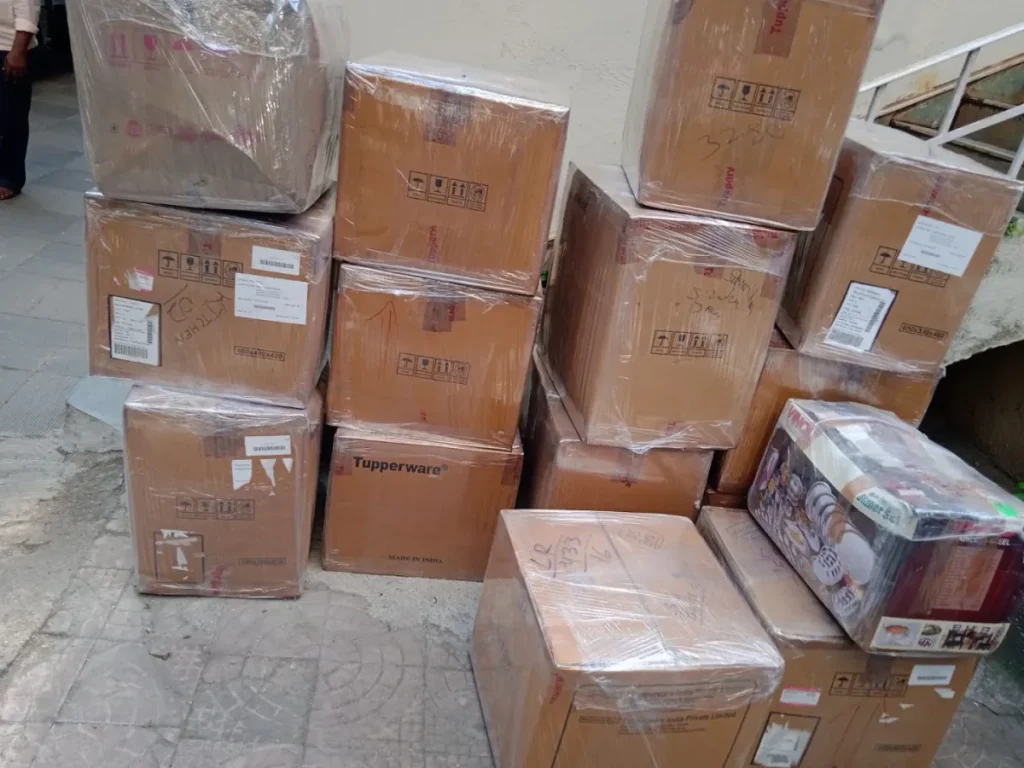
Many families time this move with the griha pravesh. If that is your plan, see our griha pravesh muhurat dates for Mumbai and Thane, and book the move once you have the date. For new towers on the corridor, our Manpada and Ghodbunder Road pages cover building access and local prices.
Flat Possession Checklist: Printable Summary
- Copy of the occupancy certificate for your building, and the completion certificate if issued.
- Possession letter with the date.
- Final payment matched to the agreement; no-dues letter received.
- Carpet area checked.
- MahaRERA registration number noted.
- Room-by-room inspection done; snag list submitted in writing with photos.
- Snags fixed and rechecked.
- Keys, access cards, appliance warranties and manuals collected.
- Electricity, gas, water and internet set up.
- Property tax and society registration started.
- Move-in slot, lift and parking booked with the building.
- Mover booked; door, lift and room sizes measured.
Frequently Asked Questions
What should I check before taking possession of a flat?
Check the occupancy certificate, the possession letter, the final payment and no-dues letter, and the carpet area. Then inspect every room for cracks, leaks, electrical faults, doors, windows and drainage, and give the builder a written snag list.
Can a builder give possession without an OC?
Buyer guides consistently advise against accepting possession before the occupancy certificate is issued. Ask for a copy of the OC that covers your building before you take the keys.
How long is the defect liability period under RERA?
Five years from the date of possession. Under Section 14(3) of RERA, the builder must fix structural and workmanship defects reported in that period within 30 days, free of charge.
When should I move in after taking possession?
After the snags are fixed and the electricity, water and gas are working. If interior work is planned, finish it first, or keep your furniture in storage until it’s done.
Do movers protect the floor and lift in a new building?
A good mover should. Ask the mover to cover the flooring and the lift, and check whether the building provides lift padding or expects the mover to bring it.
Ready to Move In?
When your new flat is ready, we can survey your current home and plan the move around your building’s move-in slot. Call or WhatsApp 93224 70950, or use the free quote form. Our household shifting prices for Thane start at ₹3,900 for a 1 BHK.
This guide is general information, not legal advice. For disputes with a builder, consult a lawyer or MahaRERA.