

Quick answer: To pack kitchen items for shifting, start a week early with things you rarely use, eat down the pantry, and keep one “first night” box aside. Wrap every plate and glass on its own, pack plates standing on edge and glasses rim-down with padding in every gap, and never pack heavy pots on top of crockery. Seal liquids and spices in zip-lock bags, defrost the fridge a day before, and sort out the gas connection with your distributor rather than putting a filled cylinder on the truck.
The kitchen is the hardest room in an Indian home to pack. It has the most items, the most breakables, the heaviest utensils, liquids that leak, spices that stain, and appliances that need preparing a day in advance. It is also the room you need working first in the new home. This guide shows how to pack kitchen items so they arrive in one piece, and how to plan it so you can cook on the first night.
What You Need to Pack a Kitchen
| Material | Used for |
|---|---|
| Strong double-wall cartons, small and medium | Crockery, glass, utensils; small boxes for heavy items so they stay liftable |
| Packing paper (plain, not newspaper) | Wrapping every plate, bowl and glass; newspaper ink can stain |
| Bubble wrap | Glassware, serving dishes, small appliances |
| Cell dividers for glasses | Keeping glasses apart in the carton |
| Zip-lock bags | Spices, dry goods, opened bottles, small parts and screws |
| Strong tape and a marker | Sealing and labelling every carton |
| Stretch film | Holding lids on containers; wrapping appliances |
If you are using packers and movers, these packing materials are usually supplied. With us, packing material is included in the price.
A Kitchen Packing Timeline
One week before
- Sort the kitchen: give away duplicate utensils, chipped crockery and appliances you never use.
- Stop buying groceries and plan meals to use up the pantry, especially oil, flour, rice and frozen food.
- Pack items you rarely use: festival crockery, serving dishes, the pressure cooker you keep for guests, extra glasses.
Three to four days before
- Pack most crockery and glassware, leaving one set per person.
- Pack spices and dry goods in sealed bags inside cartons.
- Arrange the gas connection transfer or surrender (see below).
The day before
- Defrost and clean the fridge, and leave the doors open to dry.
- Pack the last utensils and small appliances once they are clean and dry.
- Prepare the “first night” box (below).
How to Pack Crockery and Plates
- Line the bottom of a carton with crumpled paper or bubble wrap.
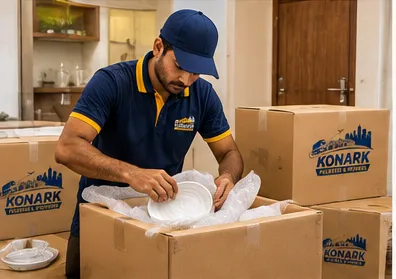
- Wrap each plate on its own in packing paper. For good plates, add a layer of bubble wrap.
- Stand plates on their edge, like files in a drawer, not flat in a stack. Plates are stronger on edge.
- Fill every gap with crumpled paper so nothing moves when you shake the box gently.
- Put a padded layer on top, seal the carton and mark it FRAGILE, THIS SIDE UP, KITCHEN.
Keep crockery cartons small to medium. A big carton full of plates is too heavy to carry safely and more likely to break.
How to Pack Glasses and Cups
- Wrap each glass in paper, stuffing a little paper inside too.
- Pack glasses rim-down, in a carton with cell dividers if you have them.
- Cups with handles: wrap the handle separately first, then the whole cup.
- Stemware and good glassware: bubble wrap after paper, and pack these in their own small box.
- Never put anything heavy on top of a glassware carton; label it clearly.
How to Pack Pots, Pans and Utensils
- Steel utensils and kadhais: nest them by size, with paper between each to stop scratches, in a medium carton.
- Non-stick pans: put a sheet of foam or paper on the cooking surface before nesting.
- Pressure cookers: pack the lid separately or upside down inside, with the gasket and whistle in a labelled bag.
- Knives: wrap the blade in thick paper or cardboard, tape it, and mark the bundle “knives”.
- Cutlery and ladles: bundle by type with rubber bands, wrap, and pack in a small box.
- Steel dabbas and containers: empty and clean them; small crockery can travel inside them, wrapped.
How to Pack Spices, Oil and Food
- Use up opened oil and liquids where you can. Tape the caps of bottles you keep, then seal them in zip-lock bags and pack upright.
- Seal spice jars and masala boxes in plastic bags so turmeric and chilli don’t stain the rest.
- Rice, atta and dal in sealed containers or double bags; heavy, so use small boxes.
- Don’t move perishable or open food over a long distance; give it away or finish it.
- Keep pickles and anything that can leak in its own carton.
How to Pack Kitchen Appliances
| Appliance | How to prepare and pack it |
|---|---|
| Fridge | Empty, defrost and dry it the day before; remove or tape shelves; travels upright, wrapped in foam and stretch film |
| Mixer grinder | Pack jars separately with blades wrapped; base in its original box or bubble wrap |
| Microwave and OTG | Remove the glass plate and racks and pack them separately; wrap the body in bubble wrap and a carton |
| Induction cooktop | Wrap the glass top in bubble wrap and pack flat in a carton |
| Water purifier | Drain it, disconnect it (or ask the service technician), and pack upright |
| Chimney | Uninstalling and reinstalling usually needs a technician; book one for both ends |
The Gas Connection and Cylinder
Do not plan to put a filled LPG cylinder on the moving truck. Check with your mover; for safety, many will not carry one. Instead, sort the connection with your gas distributor:
- Moving within the same city: ask your distributor to transfer the connection to the new address. You can usually keep the cylinder and regulator.
- Moving to another city: ask for a transfer voucher, return the cylinder and regulator to your current distributor, and register with a distributor of the same oil company in the new city using the voucher.
- Piped gas: ask the gas company to close or transfer the account and give a final bill.
Confirm the exact process and documents with your distributor, since it varies between HP, Bharat and Indane.
Pack a “First Night” Kitchen Box
Keep one box with you, not on the truck, so you can make tea and a simple meal on the first night:
- A pan, a pot, a ladle and a knife.
- Plates, glasses, cups and cutlery for each person.
- Tea, sugar, a small packet of rice or noodles, salt and a little oil.
- A match box or lighter, a dishwashing bar and a sponge, kitchen towels.
- For a griha pravesh: the vessel for boiling milk.
Labelling: Make Unpacking Easy
Label every kitchen carton on two sides with KITCHEN, what is inside, and FRAGILE where needed. Number the boxes and write the numbers on a list. At the new home, ask the crew to put all kitchen cartons in the kitchen, fragile ones on top, and unpack the first night box and crockery first.
Common Kitchen Packing Mistakes That Cause Damage
Stacking plates flat
A stack of flat plates takes every bump on the bottom plate. Place plates on edge, each one individually wrapped, and most breakage disappears.
Using boxes that are too large
A large carton full of utensils or crockery is too heavy to lift safely, and a box that is lifted badly is a box that gets dropped. Use larger cartons only for light items like plastic containers and kitchen towels.
Leaving gaps
Empty space lets items move and knock together. Fill every gap with crumpled paper or kitchen towels until nothing shifts.
Packing fragile items with heavy ones
Keep fragile items in their own cartons. A cast-iron tawa on top of glasses will win every time.
Packing anything wet
Washed utensils and a fridge that wasn’t dried properly will smell, and can damage paper and cardboard. Everything should be completely dry before it is packed.
Forgetting the essentials
If the first night box ends up at the bottom of the truck, you will be ordering dinner. Keep the essentials with you.
Packing Pooja Items Kept in the Kitchen
In many Indian homes, the pooja shelf or mandir is in or next to the kitchen. Pack these items yourself or with the crew, separately from everything else:
- Wrap idols and photo frames individually in soft cloth, then bubble wrap.
- Seal kumkum, haldi and other powders in zip-lock bags so they don’t stain.
- Empty oil from diyas and lamps before packing.
- Label the box clearly and keep it with you or load it last, so it comes out first.
Packing the Kitchen Yourself or With Packers and Movers
| Packing yourself | Packers and movers | |
|---|---|---|
| Time | Several evenings for a full kitchen | Usually done in a few hours on packing day |
| Materials | You buy cartons, paper and bubble wrap | Supplied, and included in our price |
| Breakage risk | Depends on how well each item is wrapped | Lower with an experienced crew, plus optional transit insurance |
| Best for | Small kitchens, plenty of time | Full kitchens, tight timelines, lots of glass and crockery |
A common middle path: pack pantry items, spices and the things you rarely use yourself, and leave crockery, glass and appliances to the crew. Whatever you choose, start packing the kitchen early; it always takes longer than you expect.
Frequently Asked Questions
How do I pack kitchen items for shifting?
Start a week early with things you rarely use, wrap every plate and glass separately, pack plates on edge and glasses rim-down with no gaps, seal spices and liquids in bags, defrost the fridge a day before, and keep a first night box with you.
Should I use newspaper to wrap crockery?
Plain packing paper is better. Newspaper ink can rub off and stain plates and glasses, which then need washing before use.
Can I move a gas cylinder with my household goods?
It is safer not to. Many movers will not carry a filled LPG cylinder. Transfer or surrender the connection with your gas distributor instead.
How should I pack the fridge for shifting?
Empty, defrost and clean it the day before, leave the doors open to dry, remove or tape loose shelves, and keep it upright during the move.
Do packers and movers pack the kitchen?
Yes. A full household packing service includes the kitchen, with crockery, glass and appliances wrapped item by item. Konark’s household shifting price includes packing material.
Want Us to Pack the Kitchen for You?
Our crew packs crockery, glassware, utensils and appliances item by item, and unpacks them at your new home. See our packing and unpacking service or household shifting prices, and if you are moving into a new flat, our flat possession checklist. Call or WhatsApp 93224 70950, or use the free quote form.