
Quick answer: Shifting house in the monsoon in Mumbai and Thane is entirely doable if you plan for three things: the date (avoid IMD orange and red alert days and the BMC’s high-tide days), the packing (everything wrapped in plastic or stretch film, with electronics, mattresses and wooden furniture given extra cover), and the two buildings (check the approach roads for waterlogging and the new flat for leaks before you move in). Keep a buffer, because rain slows every step of the day.
The monsoon runs for about four months in Mumbai and Thane, and lease end dates, job transfers and school admissions don’t wait for the rain to stop. So every year a lot of families end up shifting between June and September. Done badly, a monsoon move means wet boxes, water damage to furniture and a truck stuck in flooding. Done well, it is a normal relocation with more plastic. These tips cover the date, the packing materials and moving day.
When Is the Monsoon in Mumbai and Thane?
The India Meteorological Department (IMD) gives 11 June as the normal date for the monsoon to arrive in Mumbai. The real date can vary a lot: in 2026, the IMD declared the onset over Mumbai on 23 June, about 12 days late. The rain usually continues through September and withdraws by around early to mid October.
For moving, the months fall roughly like this:
| Period | What to expect | Moving advice |
|---|---|---|
| April to May | Pre-monsoon; hot and dry, occasional storms in late May | The best window if you can choose. Book early: many families try to finish before the rain |
| June | Onset; first heavy spells and the first waterlogging | Move, but watch the forecast closely |
| July to August | The heaviest rain of the year, often with alert days | Plan the date around alerts and high tides; keep a backup date |
| September | Rain easing, still heavy spells | Moving is easier than in July, but still pack for rain |
How to Pick the Right Day in the Monsoon Season
Watch the IMD alerts
The IMD issues colour-coded alerts: yellow (be aware), orange (be prepared) and red (take action). An orange or red alert for Mumbai and Thane on your moving day is a good reason to move the date. Check the forecast a week ahead and again two days before.
Check the high-tide days
Every monsoon, the BMC publishes the dates of very high tides. When heavy rain meets a high tide, water drains slowly and low-lying roads flood. Avoid fixing your move on those dates, especially if your route crosses a low-lying area.
Start early
Heavy spells build through the day. Pack early and load by mid-day for the best chance of a clear run, and follow weather updates on the morning itself.
Have a backup date
Ask your mover how a date change works if an alert is issued, and keep a second date open with both societies.
How to Pack for a Monsoon Move
The rule: your belongings should never touch water between the old flat and the new one. The right packing materials prevent most water damage.
| Item | How to protect it in the rain |
|---|---|
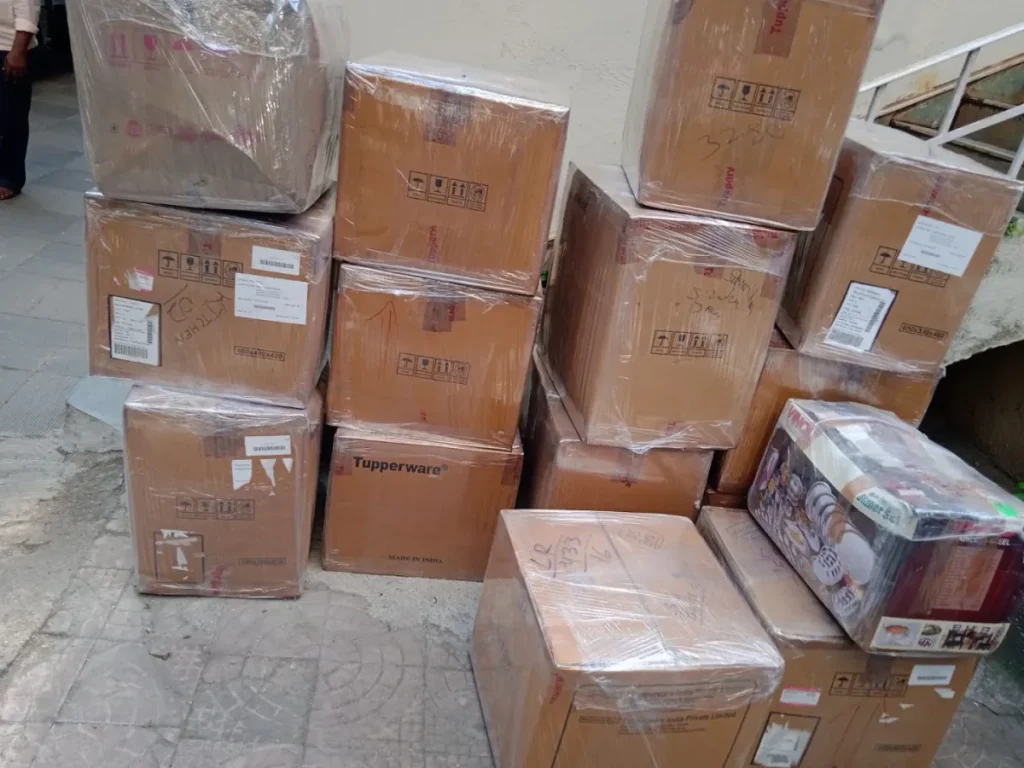
| Cartons | Strong double-wall cartons, taped on all seams, then wrapped in stretch film so rain can’t soak through the cardboard |
| Mattresses and sofas | Fully covered in plastic sheet or mattress bags, then stretch film; fabric soaks up water fast and stays damp |
| Wooden furniture | Wrapped in bubble wrap or blankets, then a plastic layer; keep it off wet floors so the legs don’t absorb water |
| TV, fridge, washing machine | Foam or bubble wrap first, then plastic on top; make sure the fridge and washing machine are completely dry inside before packing |
| Documents and valuables | In zip-lock or waterproof bags, carried with you, never on the truck |
| Clothes and linen | In plastic bags inside the cartons, so even a damp carton won’t spoil them |
| Books and papers | Small cartons lined with plastic; paper is the first thing to be ruined by damp |
Add a few silica gel packets or moisture absorbers to cartons with electronics, leather or books, especially if they will be in storage for a while.
On Moving Day in the Rain
- Load from under cover. Ask the society if the truck can come under the building’s porch or stilt parking. If not, move cartons in short trips under a tarpaulin.
- Keep the floor dry. Lay plastic sheets or old bedsheets in the lobby and lift so wet feet don’t soak the next carton.
- Ask how the truck is covered. A closed-body truck, or a tarpaulin tied down properly over the load, is what keeps the goods dry on the road.
- Don’t stack wet on dry. If a carton does get wet, keep it on top and open it first at the new flat.
- Keep the route flexible. If a road on the usual route is waterlogged, a longer dry route is better than a short flooded one.
- Raincoats and slippers for everyone. Floors get slippery; the crew needs grip to carry heavy items safely.
Check the New Flat Before You Move In
Monsoon is when hidden problems in a flat show up. Before the furniture arrives:
- Look for damp patches and seepage on walls, around windows and on the ceiling, especially in older buildings.
- Check that windows close tightly and that balcony and bathroom drains are clear.
- Find out whether the building’s approach road or basement floods in heavy rain.
- Check the electrical points near windows and balconies for water.
If you are taking possession of a new flat in the rain, our flat possession checklist covers what to inspect before the furniture goes in.
After the Move: Unpack Quickly
Cartons should not stay closed for weeks in Mumbai’s monsoon humidity. Open them within a day or two, let clothes and books air out, and wipe wooden furniture dry before setting it against a wall. If any carton got wet on the way, open it first.
Which Areas Need Extra Planning?
Low-lying roads, slopes and creek-side areas carry a higher flooding risk. Give the route more thought if you are moving to or from:
- Hillside pockets in Bhandup West, where the BMC has flagged landslide-prone spots.
- Low-lying parts of Nallasopara and Vasai–Virar, and the highway towards them, which can flood in heavy rain.
- Creek-side areas in Kalwa and Thane East.
Does Shifting in the Monsoon Cost More?
Ask any mover whether they add a monsoon or rain surcharge, and get the answer in writing. Our published local rates are ₹3,900 to ₹9,800 for a 1 BHK in Thane and ₹5,800 to ₹14,200 for a 2 BHK, with packing material, labour, transport, unpacking and GST included, and every charge is listed on the written quote. See our 2026 rate card for what moves the price within the range.
Frequently Asked Questions
Is it a good idea to shift house in the monsoon?
It is fine if you plan for it: choose a day without an IMD orange or red alert or a very high tide, pack everything in plastic or stretch film, and keep a backup date. April and May are easier if you have a choice.
When does the monsoon arrive in Mumbai?
The IMD’s normal onset date for Mumbai is 11 June, but it varies. In 2026, the monsoon reached Mumbai on 23 June. It usually withdraws by early to mid October.
How do I protect furniture from rain while shifting?
Wrap wooden furniture in bubble wrap or blankets and then plastic, cover mattresses and sofas fully in plastic, keep items off wet floors, and make sure the truck is closed or the load is properly covered with a tarpaulin.
Do packers and movers charge more in the monsoon?
Some may. Ask for the full price in writing. Konark lists every charge on the written quote, and packing material, including the plastic and stretch film used for rain, is included in our price.
What should I check in a new flat during the monsoon?
Look for seepage and damp on walls and ceilings, check that windows close tightly, that drains are clear, and whether the approach road or basement floods.
Planning a Move in the Rain?
Tell us your date and both addresses, and we’ll plan the packing and the route for the weather. Call or WhatsApp 93224 70950, or use the free quote form. See our household shifting page for what’s included.
Sources: India Meteorological Department normal onset date for Mumbai, and IMD’s 2026 onset declaration (23 June 2026) as reported by Business Today.